

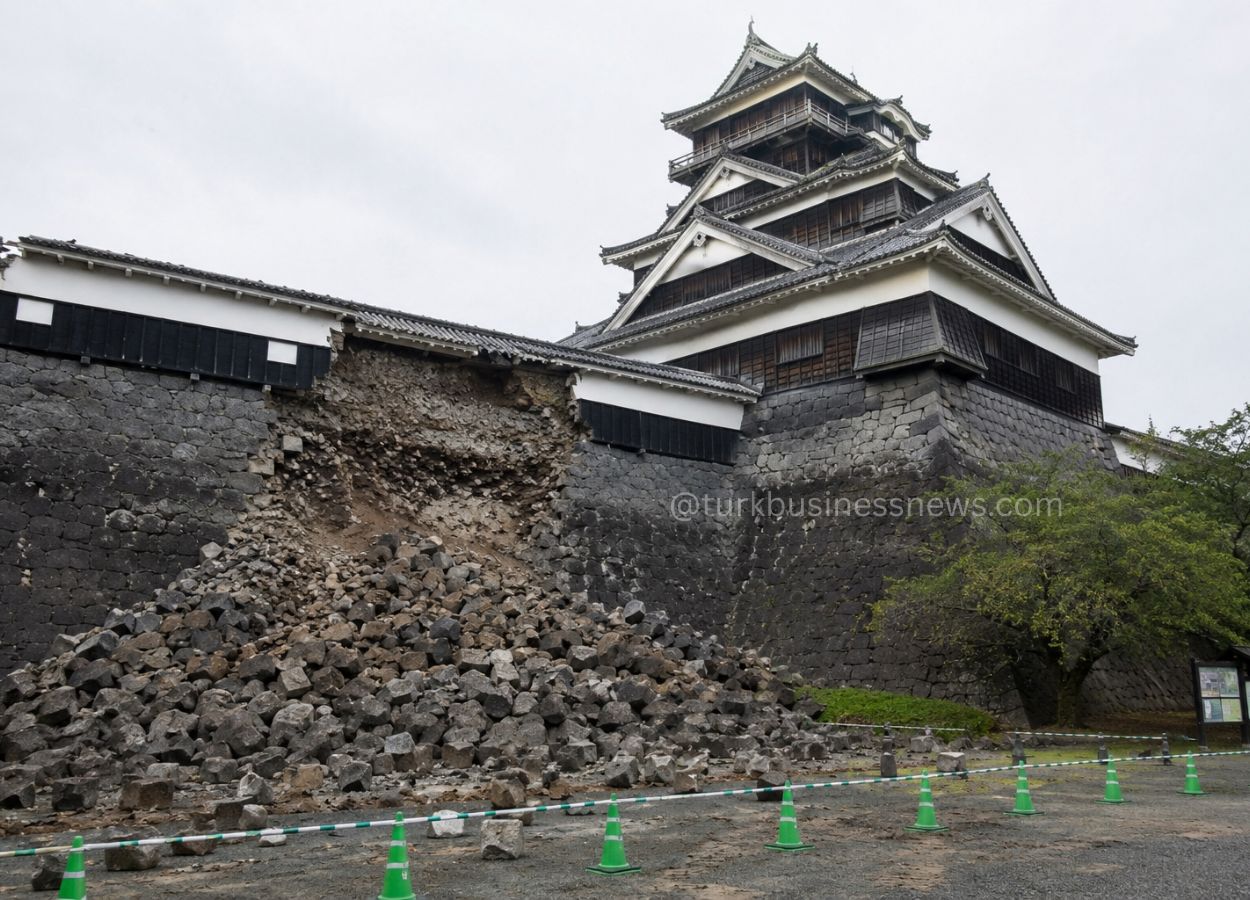
There is an earthquake in Japan’s Kumamoto Prefecture that has resulted in damage to the historic Kumamoto Castle, as some of its stone walls have come crashing down. This event has made people wonder about how safe historic places are in a country that has many earthquakes.
The earthquake hit parts of southern Japan, causing checks of buildings and old monuments. While officials worked fast to find out how much damage the earthquake caused. Initial reports said the most affected place was Kumamoto Castle, whose old stone wall had fallen down after the earthquake.
Kumamoto Castle is regarded as one of Japan’s most important feudal-era landmarks and has undergone extensive restoration since it sustained severe damage during the devastating 2016 Kumamoto earthquakes. Engineers and conservation experts have spent years reinforcing the structure while preserving its historical character, making the latest damage another setback for long-term restoration efforts.
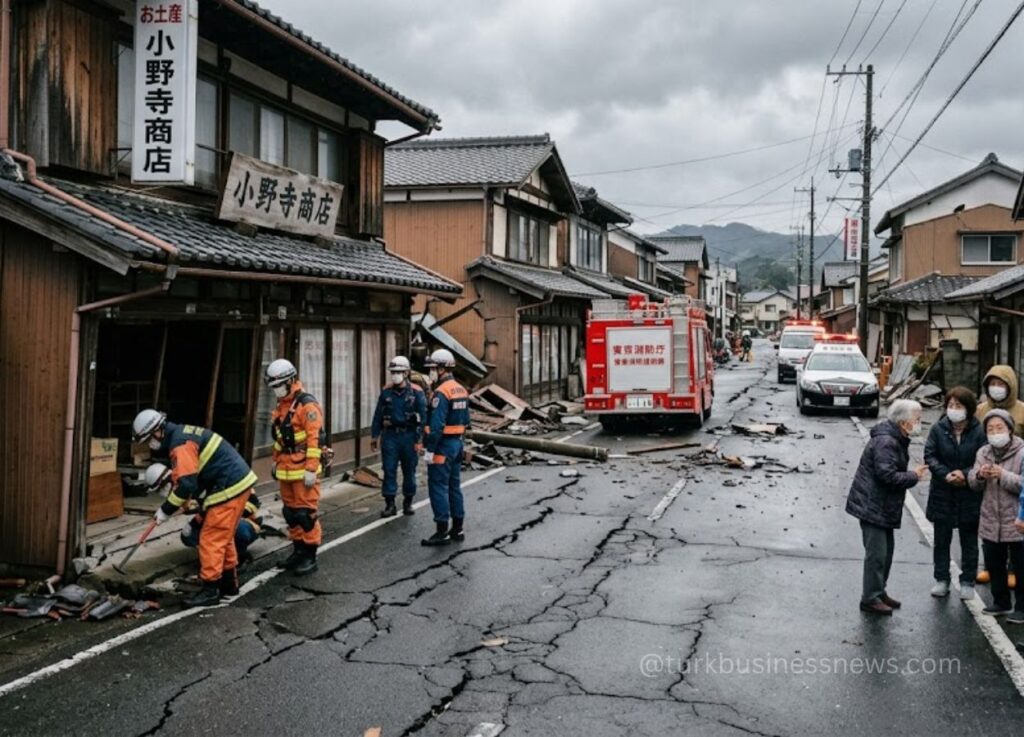
Emergency response teams inspected the castle grounds to determine whether additional structural risks remained. Authorities also monitored nearby public areas and transport networks to ensure public safety following the earthquake. No immediate reports of major casualties linked to the castle damage were released, although officials urged residents to remain alert for possible aftershocks.
Japan lies along the Pacific Ring of Fire, where several tectonic plates converge, making the country highly susceptible to earthquakes. As a result, strict building regulations and sophisticated earthquake monitoring systems have helped reduce the impact of many seismic events. However, protecting centuries-old cultural monuments continues to present unique engineering challenges because many historic structures were built long before modern seismic standards were introduced.
The latest earthquake serves as another reminder of the ongoing threat posed by seismic activity in Japan and the importance of balancing cultural preservation with disaster resilience. Authorities are expected to complete detailed structural assessments before determining the next phase of restoration work at Kumamoto Castle.

I am passionate about reporting on current affairs, public policy, technology, and social issues. The main focus is on delivering well-researched, accurate, and reader-friendly stories that simplify complex topics. Through my writing,, the aim is to provide credible information.