


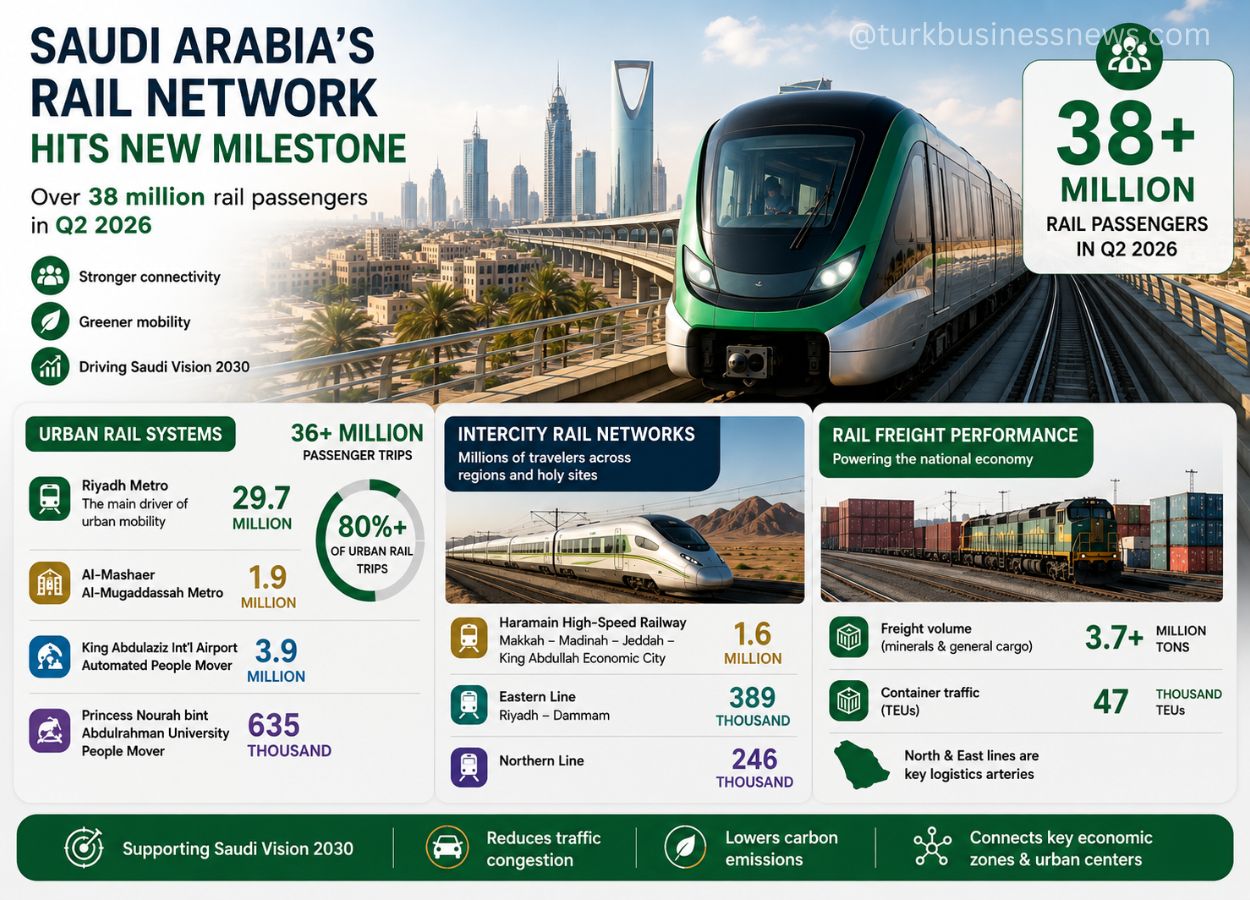
The number of rail passengers in Saudi Arabia reached above 38 million within the second quarter of 2026 due to large-scale popularity of the recently launched Riyadh Metro, according to the official data released by the Transport General Authority (TGA) on Tuesday. The statistics highlight the significant changes that modern rail transportation has brought about in terms of enhancing urban transportation and connectivity.
Urban rail systems have been responsible for more than 36 million passenger trips in the course of three months. The Riyadh Metro became the main source of using urban transport, having transported 29.7 million people, accounting for more than four-fifths of all trips in urban rail transport systems. Additionally, a considerable number of passengers were served by the other transit systems – the Al-Mashaaer Al-Mugaddassah Metro transported 1.9 million passengers, and King Abdulaziz International Airport and Princess Nourah bint Abdulrahman University automated people movers carried 3.9 million and 635 thousand passengers, respectively.
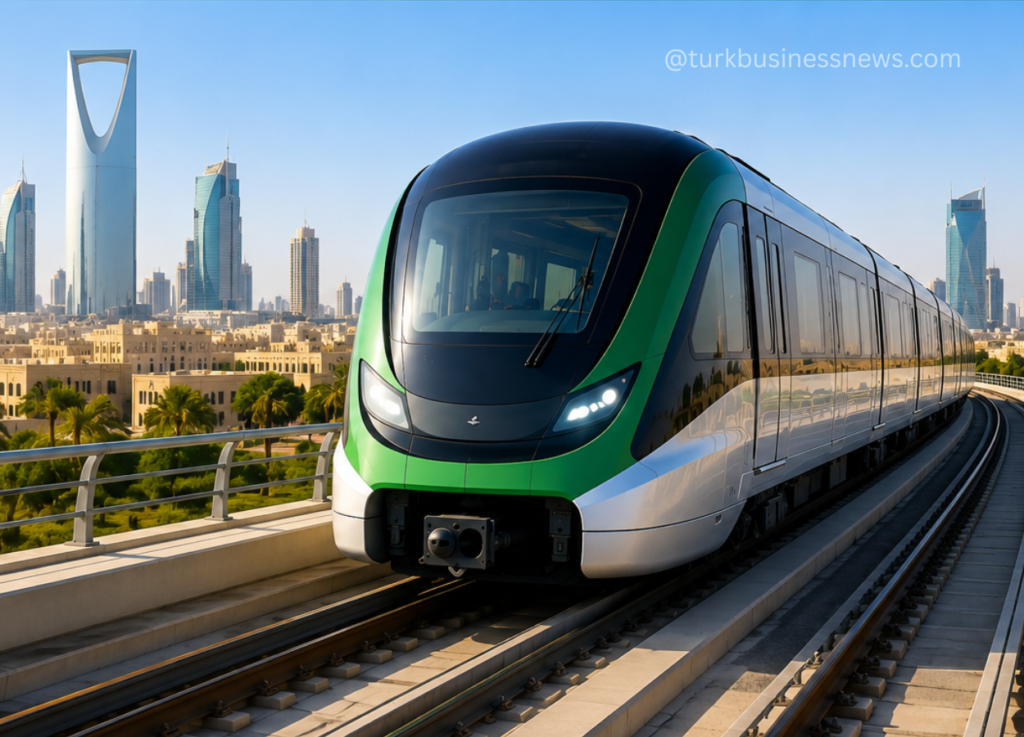
Intercity rail networks simultaneously reported strong demand, carrying millions of travellers across regional hubs and holy sites. The Haramain High-Speed Railway, which connects Makkah, Madinah, Jeddah, and King Abdullah Economic City, transported 1.6 million passengers in Q2. Additionally, regional services operated by Saudi Arabia Railways saw 389,000 passengers on the Eastern Line connecting Riyadh to Dammam, while the Northern Line carried roughly 246,000 passengers.
Beyond passenger transit, Saudi Arabia’s national rail framework handled substantial freight volumes to bolster national supply chain logistics. TGA reported that rail freight operators moved over 3.7 million tonnes of minerals and general cargo alongside 47,000 standard twenty-foot equivalent container units (TEUs) during the quarter, with the North and East lines serving as crucial logistical arteries.
Transport officials highlighted that the rapid expansion and adoption of rail infrastructure directly align with Saudi Vision 2030 goals. By diverting millions of commuter trips away from highway networks, the national rail system continues to reduce traffic bottlenecks, lower carbon emissions, and strengthen connectivity between key economic zones and regional urban centers.

I am passionate about reporting on current affairs, public policy, technology, and social issues. The main focus is on delivering well-researched, accurate, and reader-friendly stories that simplify complex topics. Through my writing,, the aim is to provide credible information.